Commodity Feed Bagging: Bulk Truck or Railcar to 50- and 60-lb Bags

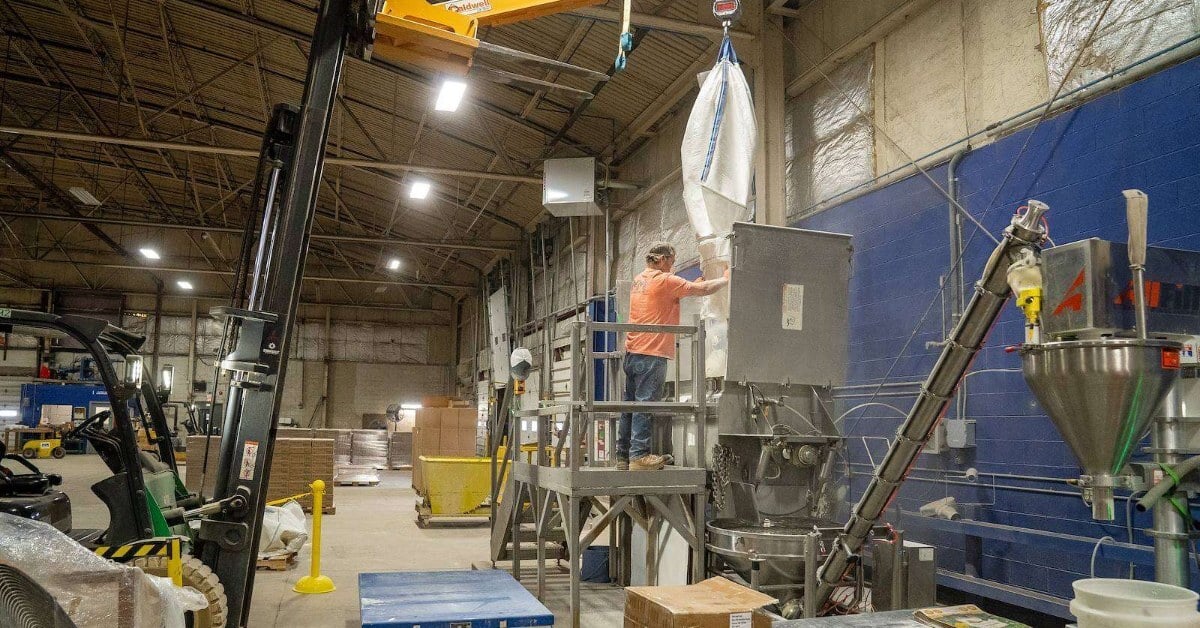
MCMILLANCO provides bulk commodity-feed receiving, transloading, and contract bagging services from its Ohio facility. Qualified dry feed ingredients can arrive by bulk truck, hopper trailer, belly-dump trailer, railcar, supersack, or another approved format and be packaged into 50- or 60-pound bags, palletized, stored, and shipped into the customer's distribution network.
This gives commodity suppliers, feed distributors, farms, agricultural retailers, exporters, and specialty-feed companies access to the economics of bulk purchasing without requiring them to own and operate a dedicated feed-bagging line.
The Market Still Needs Bagged Commodity Feed
Bulk transportation is often the most economical way to move large quantities of commodity feed. However, many customers cannot receive or consume an entire bulk truckload or railcar at once.
Smaller farms, feed stores, dealers, wildlife-feed businesses, specialty manufacturers, and export customers frequently need the same products in manageable bags.
USDA market reporting continues to track commodity feed in both bulk truckload quantities and 50-pound bags. Products reported in these formats include whole corn, wheat middlings, soybean hulls, distillers grains, cottonseed meal, alfalfa pellets, cubes, and other feed ingredients. This demonstrates an important market reality: bulk transportation may be efficient, but bagged commodity feed remains necessary for many distribution channels. (USDA Agricultural Marketing Service)
Bagged feed provides several advantages:
- Easier handling for customers without bins, silos, or pneumatic receiving systems
- More accurate inventory control and product portioning
- Access to farm stores, feed dealers, distributors, and specialty markets
- The ability to divide one bulk shipment among multiple customers
- Better flexibility during seasonal or unexpected demand spikes
- Lower capital requirements for companies without bagging equipment
- The option to palletize, store, and ship finished inventory as orders are received
The challenge is finding a processing partner capable of receiving bulk material and converting it into market-ready bags efficiently.
Bulk-to-Bag Feed Processing by the Load
MCMILLANCO can evaluate commodity-feed bagging programs beginning with a single truckload and scaling to recurring truckload or railcar quantities.
A 24-ton truckload contains approximately:
- 960 bags at 50 pounds each
- 800 bags at 60 pounds each
Actual finished-bag quantities depend on the verified inbound weight, product loss, retained samples, damaged material, and other project-specific requirements.
Under a typical bulk-to-bag program, the commodity arrives at MCMILLANCO, is received and inspected, transferred to the appropriate processing system, filled into approved bags, weight-checked, closed, palletized, stretch-wrapped, and prepared for storage or outbound shipment.
Potential inbound delivery formats include:
- Hopper-bottom trailers
- Pneumatic bulk trailers
- Dump trailers
- Belly-dump trailers
- Railcars
- Supersacks or flexible intermediate bulk containers
- Dry vans containing approved bulk containers
- Other customer-specific formats reviewed during project qualification
Not every material or delivery method will be compatible with the same equipment. Each opportunity must be reviewed before MCMILLANCO confirms a production program.
Commodity-Feed Products MCMILLANCO Can Evaluate
MCMILLANCO can evaluate qualified dry, free-flowing commodity-feed ingredients and related agricultural products, including certain:
- Whole or processed grains
- Corn and corn-based ingredients
- Soybean hulls
- Wheat middlings
- Distillers grains
- Cottonseed meal
- Alfalfa pellets
- Feed pellets and cubes
- Dry feed ingredients
- Wildlife-feed ingredients
- Other granular or powdered agricultural materials
This is not a blanket acceptance list. Equipment compatibility, regulatory requirements, contamination risk, material characteristics, cleaning requirements, and MCMILLANCO's approved operating scope must be reviewed before a product is accepted.
Medicated feeds, restricted ingredients, high-risk allergens, regulated additives, hazardous materials, and products requiring specialized processing are considered separately and may not fit MCMILLANCO's operation.
Why Outsource Commodity-Feed Bagging?
Installing an internal feed-packaging operation requires considerably more than purchasing a bag filler.
A complete system may require:
- Bulk receiving and unloading equipment
- Hoppers, conveyors, and transfer systems
- Dust collection
- Scales and weight controls
- Bag-closing equipment
- Pallet-handling equipment
- Stretch wrapping
- Warehouse space
- Trained production employees
- Maintenance support
- Quality and traceability procedures
- Regulatory compliance resources
Those investments can be difficult to justify when bagged demand is seasonal, geographically concentrated, unpredictable, or still being developed.
Contract feed bagging allows companies to add capacity or enter new markets without building an entirely new operation.
Enter new markets without major capital investment
A commodity supplier can offer bagged products to additional customers without purchasing, installing, and staffing its own packaging line.
Respond to demand more quickly
When a customer requests a truckload of bagged product, MCMILLANCO can evaluate the opportunity without requiring the supplier to disrupt its primary bulk operation.
Match the package to the customer
Depending on product compatibility, qualified materials can be evaluated for 50-pound bags, 60-pound bags, customer-supplied bags, private-label packaging, or other approved formats.
Process one load at a time
Companies can test a new product, customer, territory, or packaging format before committing to a large capital project.
Create a regional processing point
Bulk material can be transported economically to MCMILLANCO, converted into bags closer to the destination market, and prepared for regional distribution.
Add backup or overflow capacity
Established feed manufacturers can use MCMILLANCO for overflow production, seasonal demand, maintenance shutdowns, new-product launches, or business-continuity planning.
More Than Contract Feed Bagging
A reliable bulk-to-bag program requires coordination across receiving, processing, inventory, warehousing, and transportation.
MCMILLANCO can help qualified customers develop an operating plan that may include:
- Bulk receiving, unloading, and inbound inspection
- Bagging into 50- or 60-pound bags, including customer-supplied or private-label bags
- Palletizing, stretch-wrapping, and labeling
- Warehousing and inventory management for finished bags
- Outbound truckload and LTL shipping as orders are received
- Inbound rail receiving through MCMILLANCO's direct rail spur
Every program is backed by MCMILLANCO's ISO 9001:2015 certified quality management system. The facility maintains an FDA Food Facility Registration and an active Ohio Commercial Feed Registration.
Have a truckload or railcar of commodity feed that needs to be bagged? Request a quote and tell us about your product, volume, and bag requirements.