Toll Blending vs. In-House Production: What Does It Really Cost?

Before buying another blender, adding a packaging line, or hiring another shift, compare more than the production rate. Compare the complete operating model.
Toll blending can make economic sense when producing in-house would require new equipment, additional staffing, or capacity that will not stay consistently utilized. Keeping production in-house can be the better choice when you already have suitable equipment, available capacity, and an efficient process.
The question is not simply, “Who can blend this for less?” It is, “Which approach gives our business the right combination of quality, capacity, flexibility, and total cost?”
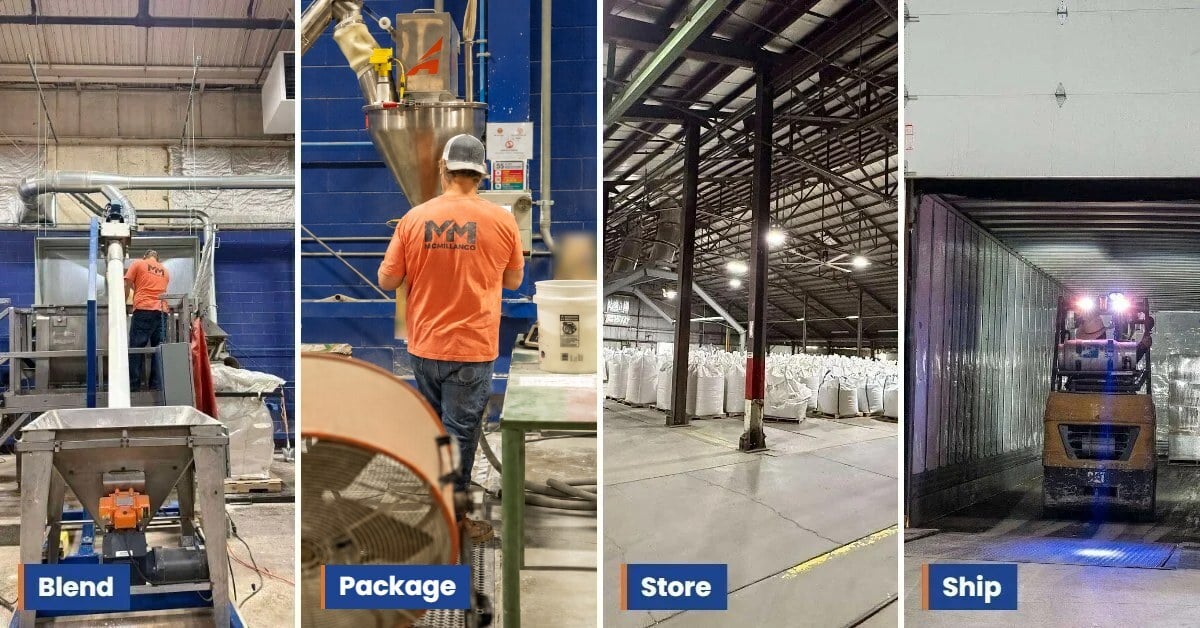
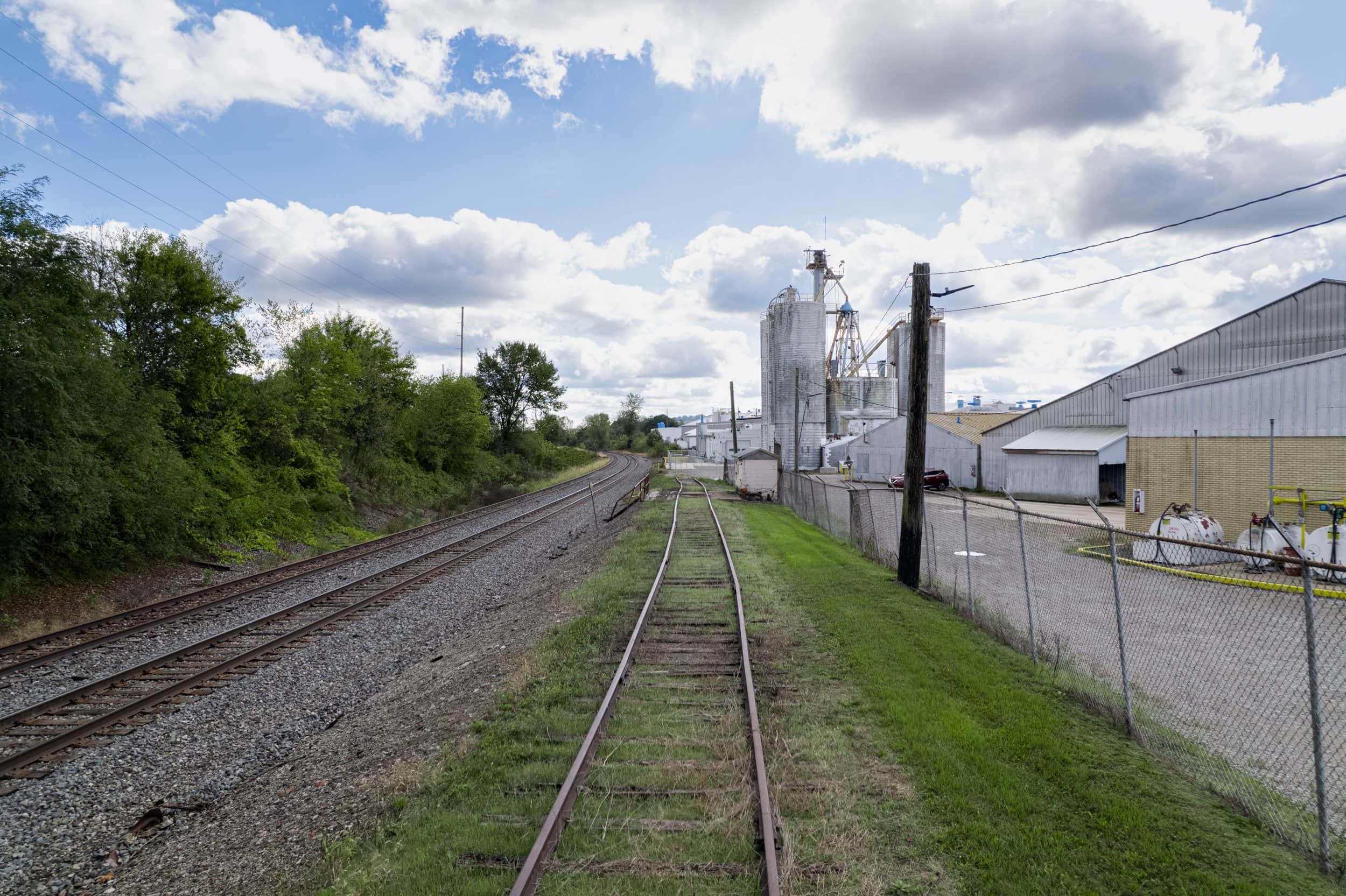
At MCMILLANCO, we approach that decision as a specialized contract manufacturing and processing partner. We connect dry powder blending, toll processing and contract packaging with warehousing, fulfillment and rail-served logistics in Perrysville, Ohio—helping customers coordinate more of their operation with one partner.
One Partner. More of Your Supply Chain. Under One Roof.
For manufacturers evaluating dry powders, minerals, or specialty blends, the comparison should extend beyond the mixer. Include receiving, preparation, blending, cleaning, packaging, palletizing, storage, and the freight needed to reach the same destination. Then consider what each approach allows your own team to focus on.
What is toll blending?
Toll blending is an arrangement in which an outside manufacturer blends materials to a customer’s agreed specifications for a processing fee. The customer typically provides the formulation and may supply the raw materials. Material purchasing, ownership, testing, and packaging responsibilities should be defined in the agreement.
The service may cover blending alone or a broader scope that connects blending with packaging and logistics. Those are different proposals, and they should be evaluated differently.
A useful proposal starts with your material, production requirements, and operating goals. It should identify the work the manufacturing partner will perform and the responsibilities your team will retain.
Start with an equal comparison—not two different prices
Before comparing a toll blending quote with your internal costs, define the same finished output for both options.
Is the requirement a blended powder in a bulk container? A labeled bag on a wrapped pallet? Finished inventory held for scheduled releases? Or product delivered to a specific customer location?
A blending-only rate should not be compared with an internal number that includes packaging, storage, and shipping. Likewise, a fully packaged tolling quote should not be compared with only the wages of the person running your mixer.
Use the same formula, acceptable quality, saleable quantity, package format, release schedule, and delivery endpoint. Then identify which costs change under each option.
The useful question is: What will it cost us to deliver the same result?
Which in-house production costs belong in the comparison?
Equipment and installation
For a proposed production line, look beyond the blender purchase price. Evaluate the complete installed process: material feeding, weighing, conveying, dust management, bagging, electrical work, installation, startup, and any project-specific facility changes.
For equipment you already own, its original purchase price is not a new cash expense. Consider future maintenance, replacement needs, available resale value, and any avoidable operating costs separately.
Do not count the same investment as an upfront purchase, depreciation expense, and loan principal in one comparison. Keep the investment analysis and ongoing operating-cost comparison consistent.
Labor, setup, and cleaning
Measure the complete job—not only the time the blender runs.
Include receiving and staging materials, weighing ingredients, charging and discharging the blender, making in-process checks, filling packages, handling pallets, cleaning, and documenting the batch.
A practical starting point is:
Labor cost per saleable pound = total labor cost attributable to the run ÷ saleable pounds produced.
Use a realistic labor rate that includes the relevant employer costs, and account for the people involved in each step. Evaluate actual runs rather than assuming every production hour achieves the equipment’s maximum output.
Quality, changeovers, and material losses
Define the required inspections, sampling, testing, batch documentation, cleaning, and product-release process for both options.
Where records are available, include material losses, rejected production, rework, and disposal attributable to the job. A cost-per-pound comparison is more useful when the denominator is acceptable finished product—not simply pounds charged into the mixer.
Material requirements also belong in the scope. A project involving graphite or a fine mineral powder may require a different process review than a free-flowing granular blend. Our graphite powder blending guide outlines questions to evaluate before scaling a graphite program.
Packaging and finished-product handling
Compare equivalent bags or containers, liners, labels, closures, pallet patterns, stretch wrap, and finished weights. Confirm who supplies each packaging component and which handling steps are included.
A lower processing rate may not remain lower after separately priced packaging and handling are added. An itemized proposal is not automatically more expensive, either. What matters is the complete agreed scope.
Storage and freight
Map the material’s route from supplier to production and from production to its next destination. Include receiving, storage, transfers, outbound handling, and the freight costs that differ between the alternatives.
Do not assume either model eliminates inventory carrying costs. Someone still owns the material, finances it, and decides when it ships.
Compare actual shipment quantities and destinations. Bulk handling or rail access may be worth evaluating for a suitable program, but neither should be treated as an automatic freight saving.
The most important distinction: costs that disappear versus costs that remain
Moving a product to a toll blender does not automatically eliminate your building lease, supervisor’s salary, or existing equipment payments.
For a cash-cost comparison, separate expenses that actually stop from costs that remain after the work moves.
There can still be value in releasing floor space or employee time. For example, your team may be able to use that capacity for another profitable product. But that is a capacity or opportunity benefit—not necessarily an immediate reduction in payroll or rent.
Do not count the same benefit twice: once as a cost saving and again as additional production capacity.
When new equipment is being considered, also evaluate the upfront cash commitment, expected useful life, and demand risk. A recurring operating-cost comparison does not replace an investment review.
Find your break-even point
Break-even volume = avoidable fixed costs ÷ (outsourced cost per lb − in-house variable cost per lb)
Below that volume, outsourcing typically costs less; above it, in-house production may. The result depends entirely on which fixed costs truly go away when the work moves—if they stay on your books, they aren't savings. Run it with your own numbers, or send us your volumes and we'll help you build the comparison.
From pilot to production: what happens when demand changes?
An annual forecast does not explain how production will be released throughout the year.
Consider a hypothetical 600,000-pound program. Producing 50,000 pounds every month is a different scheduling requirement from producing the entire volume during a short seasonal window. Use the expected release pattern when requesting capacity and pricing.
For a new product, compare a conservative launch case with the expected case before committing to dedicated equipment. For a seasonal product, evaluate the capacity needed during the peak—not only the annual average. For an established product, compare current demand with the point at which another shift or production line becomes necessary.
Give potential manufacturing partners an honest view of forecast confidence, expected order sizes, and timing. A forecast supports planning; it is not the same as a confirmed production order.
MCMILLANCO supports pilot runs and recurring production programs, with batch size, packaging and throughput matched to the project. The objective is a practical path from an initial run to repeat production—not an assumption that every material or forecast can use the same equipment and schedule.
When does keeping production in-house make sense?
Keeping a process internal may be the stronger choice when existing equipment is suitable, the team can run it efficiently, demand is dependable, and there is sufficient capacity without displacing more valuable work.
It may also be appropriate when the process requires specialized controls or integration with another internal operation that an outside partner cannot practically reproduce.
The right partner should help you evaluate that decision honestly. Outsourcing should solve a defined operating problem at an acceptable cost and level of risk—not replace a sound in-house process simply for the sake of moving the work.
Does outsourcing have to mean moving everything?
The choice does not have to be all-or-nothing.
A manufacturer might retain its primary product internally while qualifying an outside partner for seasonal overflow, specialty formulations, packaging, or a new product launch.
However, a backup supplier is only useful when the process, specifications, materials, commercial terms, and scheduling expectations are established. Do not assume unused capacity will be immediately available when an urgent order arrives.
Our guide to choosing a toll blending and contract packaging partner covers the operational questions to ask alongside the cost comparison.
More Than a Manufacturer. An Extension of Your Team.
A manufacturing partner should bring more than an available blender. The relationship should provide a practical way to address gaps in equipment, labor, process support, space, or coordination—while keeping your team focused on the work it does best.
MCMILLANCO takes a manufacturing-first approach. Our operations are located on a 500,000+ square-foot, rail-served industrial campus in Perrysville, Ohio. MCMILLANCO is ISO 9001:2015 certified for its quality management system. Production requirements, material fit and available capacity are reviewed for each project.
Keep Products Moving After Production.
When MCMILLANCO supports a blending program, the scope can also include contract packaging, palletizing, warehousing and distribution, fulfillment and related material handling. For suitable bulk-material programs, rail-served logistics can be evaluated as part of the plan.
Connecting those steps can reduce vendor handoffs and simplify scheduling and material movement. The cost comparison should test that opportunity against the actual receiving, production, storage and shipping requirements—not assume every connected service produces a saving.
You do not have to move every part of your operation. A project can cover a standalone service or a connected program, based on material fit, requirements and available capacity. The objective is the right support for your business, not a larger bundle of services.
Frequently asked questions about toll blending costs
How much does toll blending cost per pound?
There is no single rate that answers the question for every product. Request pricing against your material specifications, batch and order sizes, packaging, testing, handling, and logistics requirements. Confirm which charges are included before comparing suppliers or an in-house process.
Does a toll blending quote include raw materials?
Not necessarily. A proposal may cover processing customer-supplied ingredients, or it may include agreed purchasing responsibilities. Confirm raw-material ownership and purchasing, packaging supplies, freight, testing, and storage in writing.
Can small batches be evaluated for outsourcing?
Yes, but do not assume that a small batch will carry the same per-pound cost as a larger run. Setup, cleaning, and documentation still need to be accounted for. Ask for project-specific batch sizes, minimum charges, and qualification requirements.
Is the lowest price per pound the best option?
Only when the scope, quality, yield, delivery requirements, and risk are genuinely comparable. A useful decision considers the complete agreed process—not an isolated blending rate.
A Process Built Around Your Business
A cost comparison is most useful when it leads to a workable production plan. MCMILLANCO’s approach can include Assess → Plan → Test → Scale → Reassess.
Assess the current process, material requirements and goals. Plan the production and logistics scope, including the costs and responsibilities on both sides. Test the proposed approach at an appropriate scale before committing to broader production. Scale around validated requirements, confirmed orders and agreed capacity. Reassess the plan as volumes, packaging or customer needs change.
This gives the discussion a purpose beyond finding a low price per pound: determining whether the proposed process can support your operation today and as the program develops.
Compare your next production investment with a toll blending proposal
Before purchasing another blender or packaging line, put both operating models on the same page.
Share your current SDS, product specifications, available material characteristics, expected monthly releases and annual volume, incoming material format, finished packaging requirements, quality expectations, shipping destinations, and target start date. Arrange appropriate confidentiality protections before sharing proprietary formulation details.
Our team can review your requirements and develop a toll blending and packaging proposal for the scope MCMILLANCO can support. Whether the need is one service or a connected production program, the goal is the same: a practical solution built around your business.
One Partner. More of Your Supply Chain. Under One Roof.
MCMILLANCO, LLC | Perrysville, Ohio | 614-800-0334